
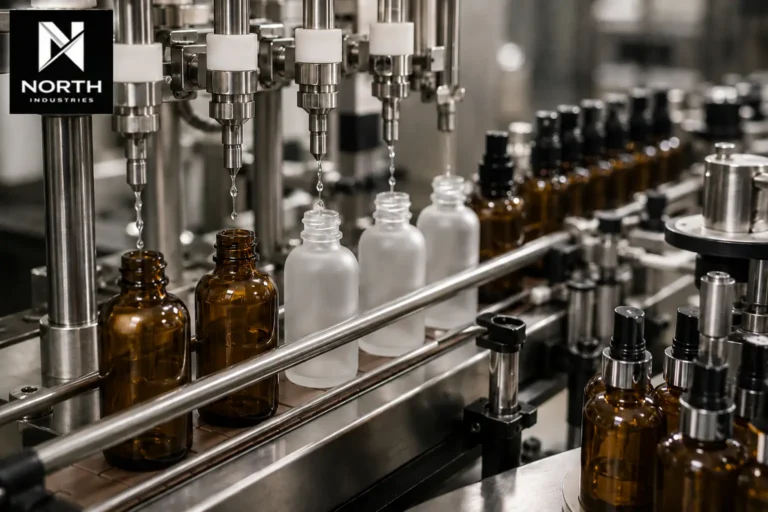
If you are a consumer-brand founder with a product and no production partner, co-packing is the service you are looking for: a company that fills, labels, assembles, and packs your product into sellable units. It is priced from a handful of components, the MOQ being the one that surprises people most, and you find the right one by asking a few filtering questions before you invest weeks. Founders often say it took months and twenty-plus emails to land a co-packer. It does not have to, and this guide shows why.
TL;DR
- Co-packing is when an outside company packages, or makes and packages, your product so you can focus on the brand.
- Finding one is slow mostly because of MOQ mismatches and unfamiliar vocabulary, and the fix is asking the right questions in your first email.
- Two minimums matter: the co-packer’s production MOQ and your packaging supplier’s material MOQ, and they rarely line up.
- Ontario and the GTA hold one of Canada’s densest concentrations of co-packers, and co-packing near your warehouse cuts freight on every run.
- North Industries co-packs, stores, ships and delivers from one Mississauga facility and runs small-batch and pilot programs, so early-stage brands are not turned away at the door.
What co-packing actually means
Co-packing, short for contract packaging, is when an outside company packages your product for sale so you can focus on building the brand. In its simplest form, a co-packer takes your finished or bulk product and turns it into shelf-ready, retail-ready, or e-commerce-ready units: filling, capping, labelling, bundling, boxing.
Three terms get blurred constantly, and getting them straight saves time in every conversation that follows:
- Co-packing packages a product you have already made, or that arrives in bulk. Some co-packers also produce it, which makes them a contract manufacturer too.
- Contract manufacturing makes the product for you from a recipe or formulation. You hand over a spec, they produce it.
- Private label is a product the manufacturer already makes, which you brand as your own.
One test cuts through it: do you already make the product? If you make it and just need it packaged at scale, you want a co-packer. If you have a formula but no way to produce it, you want a contract manufacturer. Many brands start with a contract manufacturer for production, then keep the same partner for packaging and fulfillment because it is cheaper than trucking goods between vendors.
The types of co-packing
Co-packing covers a range of work, and knowing which type you need makes your search far more precise:
- Liquid filling. Bottles, jars or containers filled with oils, serums, cleaners, sprays, concentrates, and automotive or pet-care liquids. This is a specialized capability not every co-packer offers.
- Dry filling. Powders, granules and dry goods into pouches, jars or containers.
- Kitting, bundling and multipack assembly. Multiple items combined into one sellable unit: variety packs, promotional sets, gift boxes, subscription boxes.
- Labelling, relabelling and rework. Applying or correcting labels and barcodes, and fixing packaging problems on goods that already exist.
- Co-packing plus fulfillment. Packaging and warehousing or shipping handled together, so your product is not trucked between vendors.
North Industries focuses on liquid and consumer-goods co-packing across beauty, personal care, household, automotive and pet care, the categories where filling, labelling and assembly are the core of the job.
How co-packing pricing works in Canada
Co-packing is not quoted as one number. It is built from a few components, and the one that surprises founders most is the MOQ.
The minimum order quantity (MOQ) is the smallest run a co-packer will produce, and it exists because setup, changeover, and labour have to be worth their time. Small-batch co-packers may run a few hundred to a few thousand units, while larger operators often want tens of thousands per SKU. Neither is right or wrong. The trick is matching your volume to a co-packer whose economics fit your stage.
Here is the nuance almost every first-timer misses: there are two separate MOQs, and they rarely match. The production MOQ is the co-packer’s minimum run. The material MOQ is the minimum your packaging supplier will sell, whether that is bottles, caps, labels or cartons. A co-packer might happily run 5,000 units, but if your bottle supplier’s minimum is 50,000, you have just financed 45,000 bottles you will not use for months. Model both together before you commit to a package. Founders who scale cleanly plan the product, the packaging and the partner as one decision.
The rest of the quote typically includes:
- A run rate, per unit or per case, lower per unit as volume rises.
- A one-time setup or changeover fee.
- Packaging materials, if the co-packer sources them.
- Storage and fulfillment fees, if the same partner warehouses and ships.
Get every one of these in writing up front so the quote is the number you actually pay. North Industries quotes co-packing this way, with per-unit or per-filled-unit rates, per-project quotes, and labour billed hourly or by completed unit, and it runs small-batch production and pilot programs. That last point matters if you are early: a brand whose volume does not yet clear a large operator’s MOQ can start with a trial run rather than being turned away.
The five questions to ask every co-packer before you sign
You can filter most of the market with five questions in your first message:
- What is your MOQ for my product type and format? This eliminates the mismatches fastest.
- What is your lead time from approved sample to first run? “Booked out for months” is the answer you want now, not in week four.
- What certifications do you hold, and are they current for my category? Food, natural health products and other regulated goods each have specific requirements. Verify, do not assume.
- What is included in the per-unit price, and what is billed separately? Setup, materials, storage, and rework should all be explicit.
- Can you also warehouse and ship the finished product? If yes, you may cut a vendor and a freight leg out of your supply chain.
Red flags of a co-packing partner to avoid
Walk carefully if a co-packer shows any of these:
- Will not give a straight MOQ or lead time.
- Is vague about what the per-unit price includes.
- Has no relevant experience in your product category.
- Cannot or will not put the quote in writing.
- Dodges questions about certifications your category legally requires.
There is a subtler one too. A partner who takes weeks to answer a simple email while courting your business rarely gets faster once your product is in their queue. Responsiveness before the deal is the best predictor of responsiveness after it.
Why Ontario is a strong place to co-pack
Ontario, and the GTA specifically, holds one of the densest concentrations of manufacturing, packaging and logistics operators in the country, sitting on the highway, air and rail infrastructure around Mississauga and Pearson. For a consumer brand, that concentration means more potential partners, plus proximity to the U.S. border and to most of the Canadian population for onward distribution.
Proximity matters more than founders expect, because one of the highest recurring costs in consumer goods is simply moving product, from the co-packer to your warehouse, and from your warehouse to retailers or customers. Every kilometre between those points is freight you pay on every run. Co-packing close to where your inventory is stored and shipped is one of the quiet ways brands protect their margin.
The one-roof advantage: co-packing plus 3PL
This is where the math gets interesting. A brand that fills at one facility, warehouses at another and ships from a third pays freight between each hop, reconciles three sets of paperwork, and coordinates three schedules. When a labelling error turns up, they are on the phone to all three working out whose problem it is.
Combine co-packing and 3PL under one partner and those hops disappear. Your product is filled, labelled, assembled, stored and shipped from the same building. There is no inter-vendor freight, one team owns the outcome, and rework, if it is ever needed, happens where the goods already sit. For a growing brand, the drop in coordination is often worth as much as the drop in freight.
What North Industries offers for co-packing in Mississauga
North Industries runs co-packing, filling and assembly from its Mississauga facility, alongside warehousing, fulfillment and company-operated final-mile delivery, so a product can move from packaging through to the customer under one relationship. For consumer brands, that means:
- Liquid filling and bottling for oils, serums, cleaners, sprays and similar products.
- Labelling, relabelling and barcode application.
- Kitting, bundling, and multipack or gift-set assembly.
- Retail-ready and Amazon-ready packaging.
- Product rework when a shipment needs correcting before it can sell.
Because the same team then stores and ships the finished goods across the categories we serve, you are not stitching together a new vendor stack as you grow. We are also deliberate about fit and about claims. We will tell you plainly whether your category and volume suit our facility, and we do not advertise certifications we do not hold. For food or other regulated products, the right certification is something to confirm with any co-packer, us included, before production begins.
Frequently asked questions
- What is the minimum order quantity for co-packing in Ontario?
It varies widely. Small-batch co-packers may run a few hundred to a few thousand units per SKU, while larger operators often want tens of thousands. Remember that your packaging supplier sets a separate material MOQ, frequently the higher of the two, so ask about both in your first message. - How long does co-packing take from inquiry to first run?
It depends on the co-packer’s lead time and your readiness, meaning an approved formulation, sourced packaging, and an approved sample. A prepared brand working with an available co-packer can move from inquiry to first run in weeks. The usual delays are packaging MOQs, sample approvals, and finding open capacity. - What is the difference between co-packing and private label?
Co-packing packages a product you own and supply, made to your own recipe or brand. Private label is a product the manufacturer already makes, which you put your brand on. Co-packing gives you a unique product; private label gives you a faster, lower-effort route to shelf. - Do I supply my own bottles and packaging, or does the co-packer?
Either arrangement is common. Some co-packers source packaging for you and bill it as a line item, while others expect you to supply it. Clarify this early, because your packaging supplier’s material MOQ often dictates your real minimum more than the co-packer’s production MOQ does. - What industries use co-packing services in Canada?
Beauty and wellness, personal care, household products, automotive care, pet care, food and beverage, and consumer packaged goods all use co-packing. The right partner depends on your category, since liquid products, for example, need a co-packer with filling capability and the certifications your category requires.
Get a co-packing quote, and a straight answer on MOQ
You should not have to email twenty companies to get one honest reply. Tell North Industries what you are making, the format, and roughly how much you plan to run, and you will get a clear answer on whether it is a fit, what it would cost, and how quickly it could happen.